A bedroom has a job that changes through the evening. It needs to help you find a book, fold a sweater, plug in a phone, and then, later, it needs to disappear into something softer. One ceiling light cannot do both. Layered lighting can.
Think of lighting in three parts: ambient light fills the room, task light serves a specific activity, and accent light adds texture and depth. The checklist below shows how to combine them without overcomplicating the wiring, the budget, or the bedside table.
Begin With Ambient Light That Softens the Room
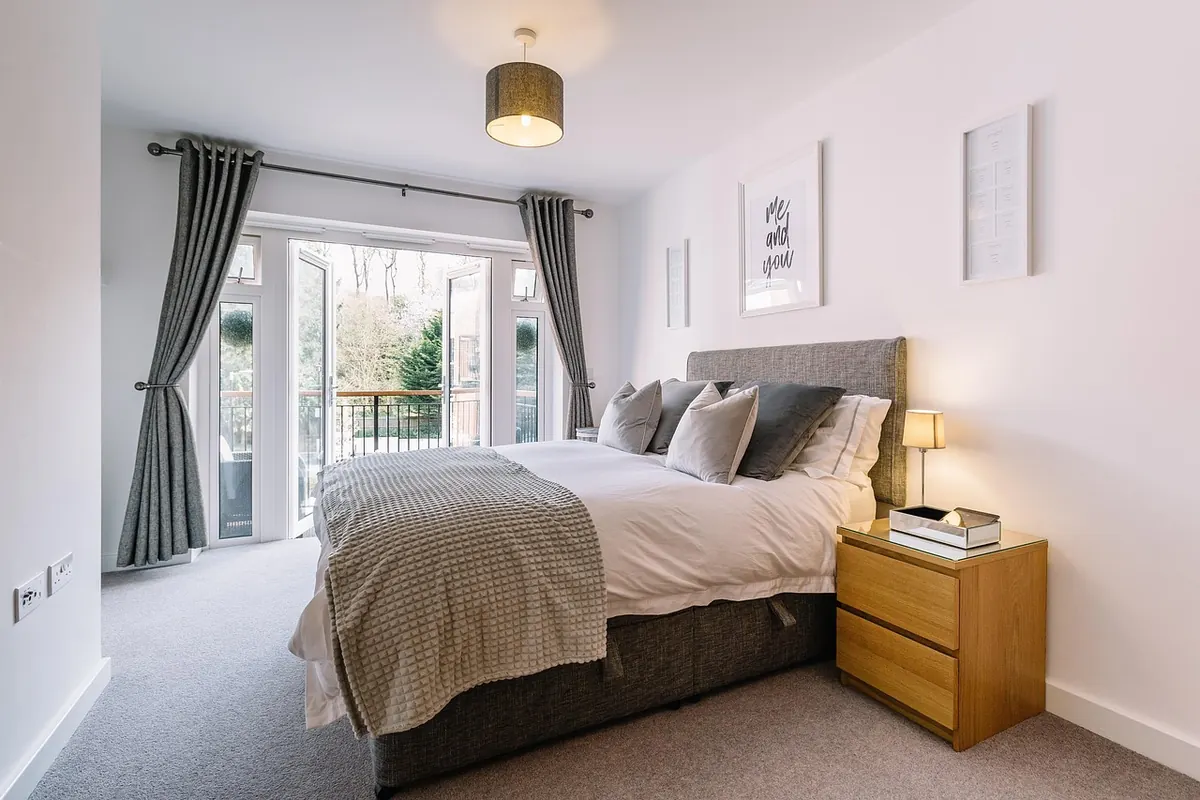
Ambient light is the base layer—the glow that lets you move around safely and see the room as a whole. In a bedroom, it should be diffuse, not sharp. A single pendant with a fabric or frosted shade, a pair of wall sconces, or a ceiling fixture that bounces light upward all work better than a grid of recessed downlights aimed at the bed.
If you already have ceiling downlights, put them on a dimmer and keep them low in the evening. Aim adjustable fixtures toward a wall or curtain rather than a pillow. Warm white bulbs—around 2700K—usually feel calmer than cool white ones, and they flatter wood, linen, and painted walls. A dimmer is more useful than a brighter bulb, because it lets the same fixture move from practical to peaceful.
Put Task Light Where Your Hands and Eyes Go
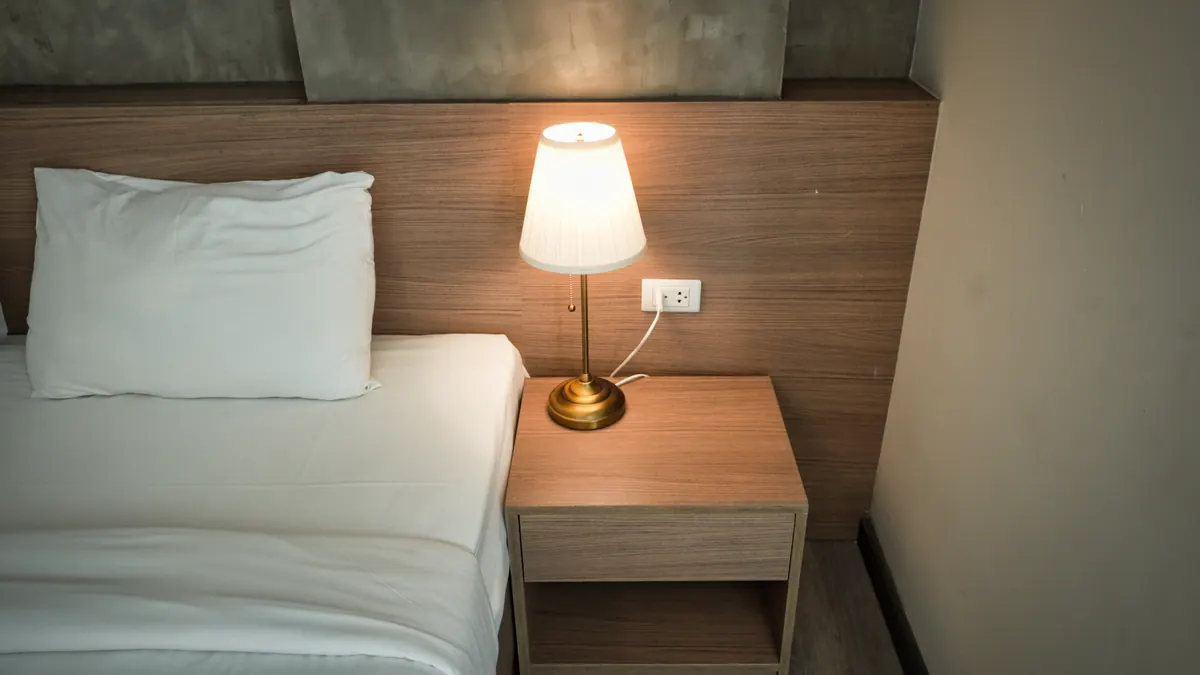
Task lighting is the layer people notice when it is missing. A bedside lamp should throw light onto a book, not into your eyes. Choose a shade that sits at eye level when you are propped up, or use an adjustable swing-arm lamp that lets you point light down. If two people share the bed, two lamps with separate switches are worth the extra cord.
Other task spots matter too. A small lamp or slim LED strip inside a wardrobe helps you see colors; a mirror light at a dressing table should come from the sides rather than straight above; a floor lamp beside an armchair makes a reading corner usable after dark. The test is simple: sit or stand where you will use the light, then check whether your hands, book, or mirror are lit without glare. Move the lamp before you buy a stronger bulb.
Add Accent Light for Depth, Not Drama
Accent light is the layer that gives the room shape. It can wash a textured wall, graze a headboard, light a piece of art, or put a low pool of light on the floor. It should be quieter than the task light and never the brightest thing in the room.
Use small sources close to the surface. A picture light above a print, a clip-on spotlight behind a plant, or a warm LED strip tucked behind the headboard can create a soft halo. A low floor lamp or a table lamp on a dresser adds another point of light at a different height, which keeps the room from feeling flat. If you use candles, keep them on a stable surface away from curtains and bedding, and never leave them burning as you fall asleep. Battery candles are an easy alternative for a shelf or bath tray.
A Layer-by-Layer Checklist for the Whole Room
Use this list as a planning tool, not a shopping list. Work through it in order, because the first items affect every choice that follows.
- Three layers, three purposes: at least one ambient source, one task source, and one accent source.
- Separate switches: ambient, task, and accent on different controls where possible.
- Dimmers: on the main ambient light and at least one bedside lamp.
- Warm bulbs: around 2700K for most bedroom fixtures; keep the same tone across lamps.
- Shades that soften: fabric, frosted glass, or opaque shades that hide the bulb from view.
- Bedside reach: a switch or lamp control you can find without sitting up.
- Light at different heights: ceiling or wall, table height, and low floor level.
- Glare check: no bare bulb, no light bouncing off a TV, no downlight aimed at a pillow.
- Spare outlet: one free socket near the bed for a charger or a small lamp.
Keep the list on your phone while you rearrange. Often, the coziest change is not a new fixture but a lower dimmer setting and a lamp moved two feet closer to the chair.
Control the Layers So They Work Together
Layered lighting only works if you can control each layer easily. Put the ambient light on a dimmer by the door, and keep the bedside lamps on their own switches or a plug-in dimmer. If you use smart bulbs, label them clearly in the app and set a warm, low default for evening. Do not make every light depend on a phone; a physical switch is still the fastest way to turn everything off.
Check dimmer compatibility before you install. Some LED bulbs hum or flicker on older dimmers, and some smart bulbs do not dim smoothly on a standard dimmer. A quick test with one bulb before you commit to a set saves frustration. Also, think about the path to the bathroom at night: a low ambient light or a motion-sensitive plug-in light near the floor is gentler than a bright overhead.
Keep These Common Mistakes Off Your List
Most uncozy bedrooms are not short of light. They are short of control. A single bright ceiling fixture flattens the room and makes every corner feel exposed. Cool white bulbs turn wood and linen gray. Uncovered bulbs create glare at eye level. Six lamps at the same height can look like a showroom rather than a bedroom.
Watch for over-lighting, too. If you can see clearly from every angle with every light on, the room probably has no soft edges left. Aim for a bright enough room for cleaning and dressing, then bring the levels down for the evening. Glossy shades and bare metal bases can bounce light sharply; a linen shade or a matte finish is usually kinder. Finally, keep light away from the television or mirror opposite the bed, where reflections become a distraction.
A Simple Evening Routine
A simple evening routine makes layering feel natural. At sunset, turn off the overhead light and switch on the bedside lamps at about half brightness. Add the accent light—the picture light, the low floor lamp, the strip behind the headboard—and leave the task light for reading. As the evening winds down, drop the lamps to their lowest setting and let the accent light be the last thing on. In the morning, use the brighter ambient layer for dressing and making the bed.
None of this requires a full rewire. Start with one dimmer, one better bedside lamp, and one small accent source. Live with it for a week. You will quickly notice which layer you reach for and which one you can leave off. That is the real checklist: light for the way you actually use the room.
Photo: LayG Traveller / Pexels