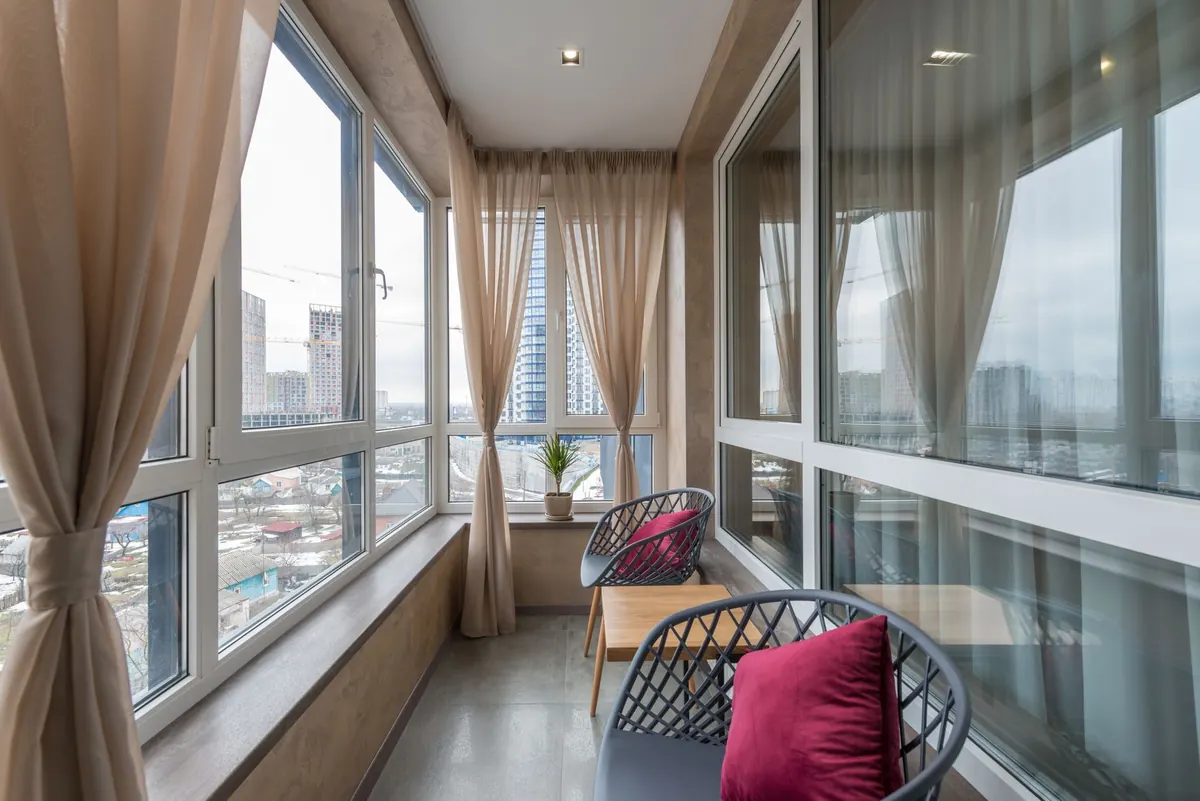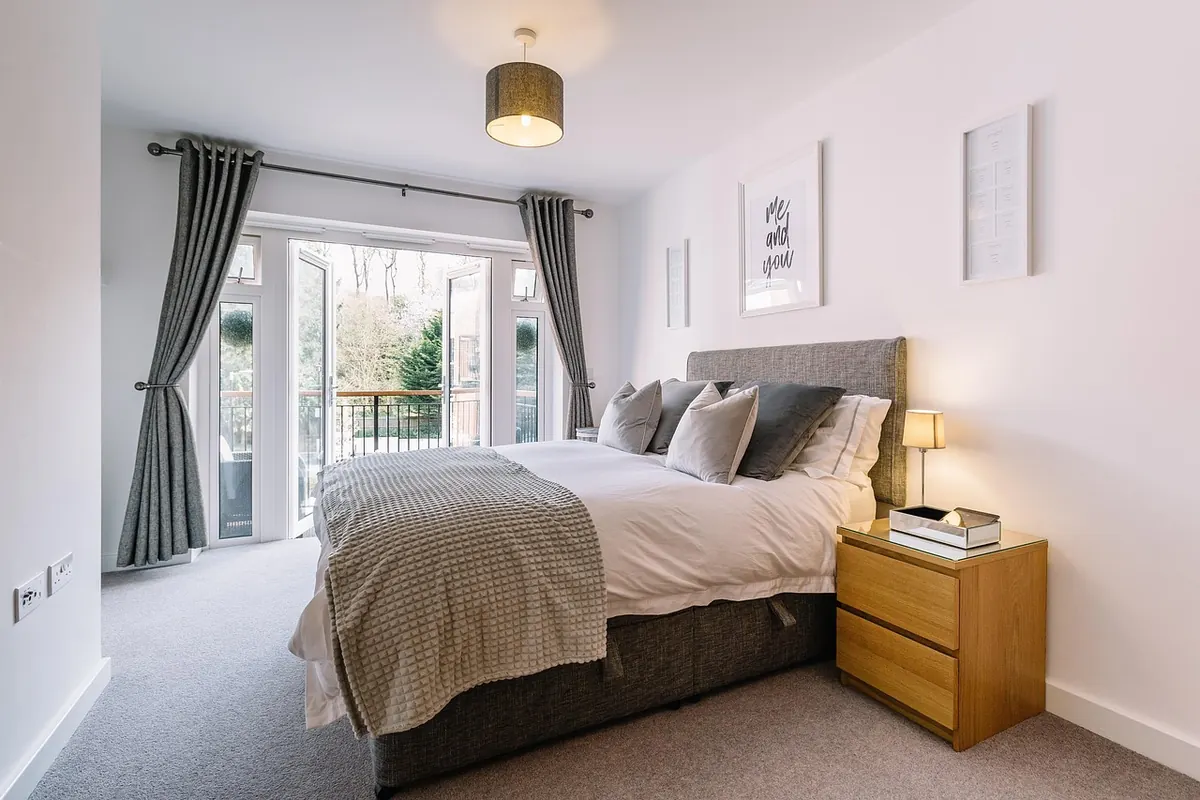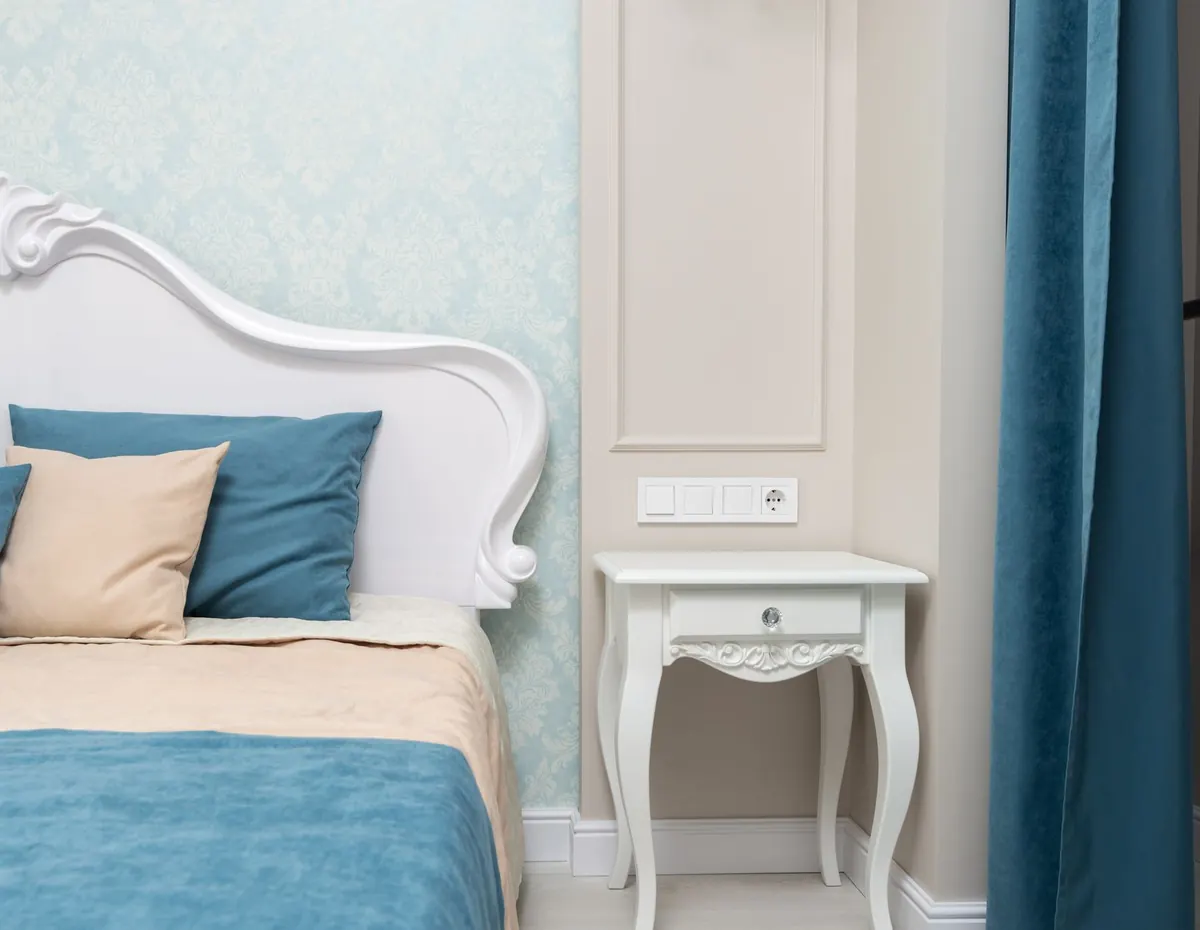
Walk past any row of apartments in an Italian town in the late afternoon and you'll see the same quiet choreography: louvered shutters folded back against the plaster, a strip of linen drifting behind the glass, sunlight sliced into bars across the floor. It looks effortless. It isn't. That layering is the result of a few decisions made in the right order, and of measurements taken before anything was ordered.
Traditional shutters do the heavy work here — light, heat, privacy, security. Curtains and blinds are the softer second voice. When the two fight, you feel it every morning: fabric crushed in a hinge, a blind that can't drop past a handle, a curtain that never quite closes because the shutter is in the way. This guide is about avoiding all of that.
Start With How Your Shutters Actually Open
Before you look at a single fabric, watch your shutters for a full day. Italian windows usually combine two or three elements, and the way each one moves dictates what you can hang behind it.
Persiane are the louvered external shutters, hinged at the sides and opening outward. They rarely cause trouble indoors, but when folded back they sit flat against the facade and throw the light sideways, which affects how a curtain reads from inside. Scuri — solid panels, often mounted inside the reveal — swing into the room, and that swing is the single most common reason a curtain plan fails. A floor-length curtain hung close to the frame will be pushed aside, creased or trapped every time the panel closes. Tapparelle roll up into a box above the window, so the obstruction is overhead rather than at the sides, but that box can limit where a rod or track can sit.
Many homes have more than one system on the same window: an outer louvered shutter, an inner glazed door, perhaps a roller behind. Count them all, then open and close each one slowly and notice where it ends up.
Measure the Reveal, Not Just the Window
The measurement that matters most is depth — the distance from the glass to the face of the wall. Measure it at the top, middle and bottom of the opening, because old walls are rarely straight and a reveal that looks 14 cm deep at eye level may be 11 cm at the sill.
That figure tells you three things: whether a blind can fit inside the reveal without touching the glass or the shutter handles, whether a rod can be mounted on the wall face without the fabric fouling the shutters, and how much space you have for the fabric to "stack" when the curtains are open. As a rule of thumb, allow 15 to 20 cm of extra track on each side of the opening so the open curtain rests over the wall rather than over the glass.
If the shutter can't open fully, nothing behind it will ever look right.
Three arrangements that reliably work
- Blind inside, curtains outside. A Roman or roller blind sits within the reveal, close to the glass, and handles privacy and light control. The curtain hangs on the wall face beyond the shutter's swing — decorative, warm, and easy to pull shut in the evening.
- Curtains on a ceiling track. When shutters fold back flat against the wall and eat the space a rod would need, mount a track on the ceiling 10 to 15 cm out from the wall. The curtains then fall clear of everything, and a shallow pelmet hides the hardware.
- Shutters alone, with a sheer. In hallways, stairwells and small studios, a single sheer on a slim track is often enough. The shutters do the work; the voile just softens the edge of the window.
Choosing Curtains That Coexist With Shutters
Fabric
Linen and cotton-linen blends are the natural partners for shutters: they hang with a bit of body, they age well, and they don't look heavy beside timber. Medium-weight wool or a wool blend works beautifully in bedrooms and living rooms in northern cities, where winter light is low and you want something that holds a fold. Keep very deep velvet and stiff synthetics away from inward-opening scuri — they crease along the hinge line and never recover.
Heading and fullness
Pencil pleat and double pleat are the safest choices; both gather neatly and take up little depth. Eyelet headings need the rod to sit well proud of the wall, so measure carefully if your shutters swing inward. Aim for roughly two to two-and-a-half times the track width in fabric — enough to look generous without becoming a wall of cloth in a small room.
Drop
Floor-length in living rooms and bedrooms, breaking just at the floor. Sill length or 2 cm below the sill in kitchens and bathrooms, where fabric near water and worktops is a nuisance. If there's a radiator under the window, finish the curtain just above it so heat can rise.
When a Blind Is the Better Middle Layer
Blinds earn their place in rooms where fabric would be impractical or where the window is too shallow for a curtain to sit comfortably. Roman blinds in a linen or cotton canvas suit period apartments and stack into a neat fold at the top. Wooden or aluminium venetians handle kitchens and bathrooms well, where steam and cooking grease would soon mark a curtain. Pleated blinds are useful on awkward shapes — arched tops, sloping attic windows, narrow stairwells.
Two practical notes. First, check that the blind's headrail clears the shutter handle when the shutter is closed. Second, if you choose a corded blind, have the cord secured to a wall cleat and kept short; loose loops are a genuine hazard where children sleep and play.
Colour and Texture: Working With the Italian Palette
The classic combination — soft grey-green or dark olive shutters, sand-coloured plaster, ivory linen — is classic for good reason. It reads calm in strong summer light and warm under lamplight in winter. The mistake is matching too precisely: a curtain dyed to the exact shade of the shutter makes the window look flat and slightly institutional.
Instead, shift the tone by one step. Dark green shutters with oatmeal linen. Oxblood or terracotta panels with off-white cotton. Pale grey shutters with a dusty sage curtain. Let texture do the rest — slubby linen, a visible weave, a wool with a little weight — so the layers are distinguished by surface as much as by colour. Hold samples against the shutters in daylight and again at night under a lamp; fabric changes character between the two.
Room by Room
Bedroom. Layer for darkness. Close the shutters at dusk, draw a medium-weight curtain, and add a blackout lining if morning light wakes you early. Keep the lining separate from the face fabric so the curtain still falls softly.
Living room. This is where you can be generous: floor-length linen on a ceiling track, shutters left half-open through the afternoon, a blind only if the window faces a street.
Kitchen and bathroom. Choose a blind or a short café-style curtain in a washable fabric. Anything that trails near a sink or hob will be regretted within a month.
Terrace doors. These need the most care. A Roman blind mounted above the door frame, plus a curtain on a track that runs past the shutter's folded position, keeps the doorway usable while still softening the room.
Before You Order: A Short Checklist
- Open and close every shutter, noting the direction and depth of its swing.
- Measure the reveal depth at three heights, and the width at three points.
- Decide which layer you'll use daily and which is for occasional evenings.
- Order fabric samples and view them against the shutters in daylight and at night.
- Confirm the drop — floor, sill or radiator top — before the fabric is cut.
Get those five things right and the rest is taste. The shutters keep doing what they've always done; the fabric simply makes the room feel finished.
Photo: wagrati_photo / Pixabay