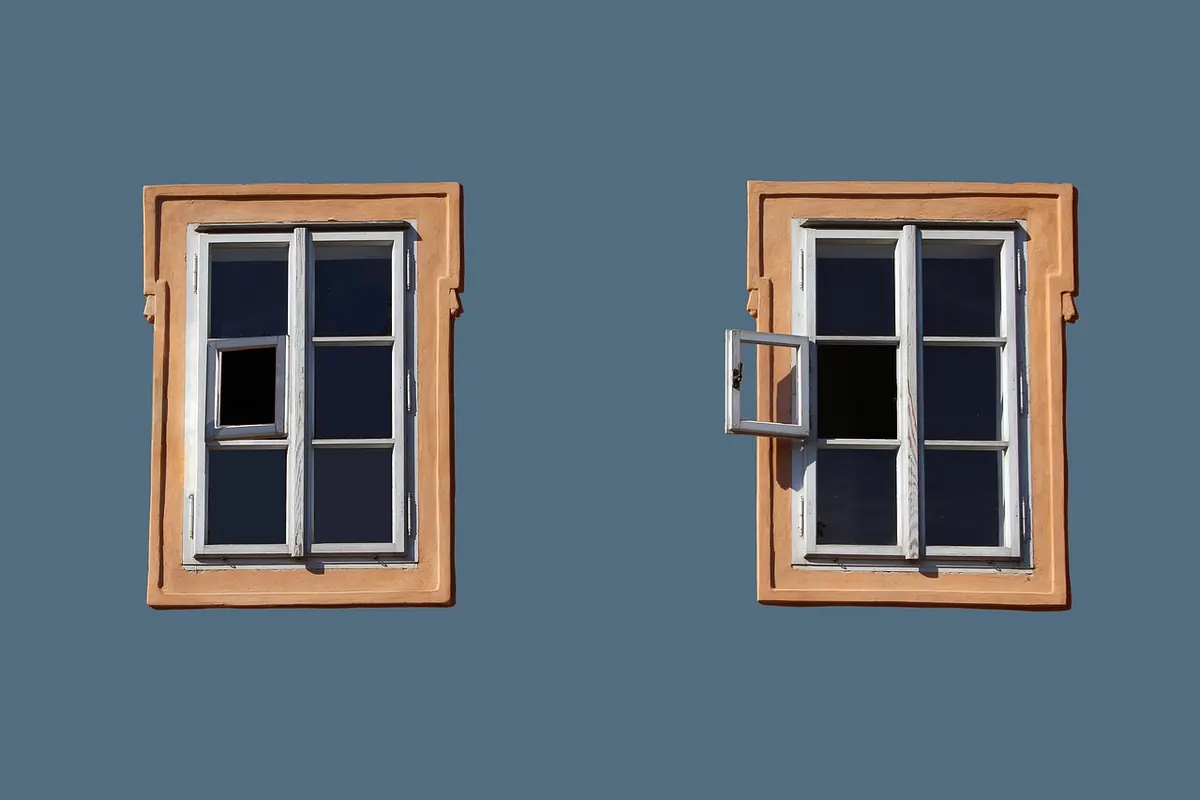
Curtains rarely fail because of the fabric. They fail because the pole was ordered 20 cm short, the drop was measured from the ceiling instead of the track, or nobody noticed the radiator. Measuring is the least glamorous part of buying curtains, and the part that decides whether the finished pair hangs well or looks like a compromise. The method changes with the window: a standard casement, a bay with three returns, an arch that curves where you least expect it. Work through the guide below with a metal tape, a pencil and a notebook, and measure each window twice.
Start with the two numbers that matter
Every curtain order comes down to width and drop. Width is the distance the curtains must cover when closed, plus the extra fabric needed for pleats or gathers. Drop is the finished length from the track or pole to the hem. Get those two figures right and the rest is detail: header type, lining, pattern repeat and how the curtains will be hung.
Before you climb on a chair, gather a few things:
- A metal tape measure, not a fabric one
- A pencil and paper, or a note on your phone
- A step stool if the track sits high
- A note of the track or pole type, including finials and brackets
Width: measure the track or pole, not the glass
For a track, measure the full length of the track. For a pole, measure the pole between the finials, then note how far the finials project. Curtains need to cover the whole track or pole, not just the window opening, because they gather back at the sides. If you are measuring for a new pole, allow 15–20 cm beyond each side of the window recess so the curtains can sit clear of the glass when open.
Then add fullness. Gathered curtains generally need about twice the track or pole width; lightweight fabrics and pencil pleat can take 2 to 2.5 times. Eyelet and tab-top curtains need less, often 1.5 to 2 times, because the folds are fixed. If you are between two figures, choose the larger one for a generous look, especially in a living room or bedroom.
Drop: choose the finish before you measure
Decide where the curtain should end: just below the sill, 1–2 cm above the floor, or pooling slightly. For a track, measure from the underside of the track to that point. For a pole, measure from the base of the ring or the eyelet line, not from the top of the pole. Write the figure down with the finish noted beside it. “Floor length, 1 cm clearance” is more useful later than a bare number.
Standard windows: measure inside or outside the recess
A standard window gives you a choice, and the choice changes the measurements. Inside the recess, the curtain hangs within the window reveal. Measure the recess width at its narrowest point and the drop from the track to the sill or floor. Outside the recess, the curtain covers the wall around the window. Measure 15–20 cm beyond each side of the recess and at least 10–15 cm above it, then measure the drop from your chosen track or pole position.
- Measure the track or pole width in centimetres and write it down.
- Decide inside or outside the recess, and note the fixing position.
- Measure the drop from the track or pole to your chosen hem point.
- Check for radiators, handles, window opening and furniture below.
- Multiply the width by your fullness ratio to get the total curtain width.
For example, a 150 cm pole with a 2× fullness ratio needs 300 cm of curtain width in total. For a pair, that is roughly 150 cm per curtain before seam allowances. A single curtain for a narrow window would use the full 300 cm, gathered onto one side. Always check the made-to-measure width stated by the supplier, because header tape and hem allowances can alter the finished look.
Bay windows: measure each section along the track line
A bay is not three separate windows. It is one run with bends, and the measurements must follow the track line rather than the wall. Measure each section from bend to bend, then record the returns: the distance from the wall to the track at each end. If the bay has angled sides, measure the longest line along the track, not the shortest line across the room.
- Left return, centre section, right return, each in centimetres
- Total track length, following every bend
- Drop at the centre and at each end, because floors and sills are not always level
- Track type: wall-fixed or ceiling-fixed, and how many bends it needs
Poles in a bay usually mean one pole per section, with curtains overlapping at the bends. That can look charming in a period room, but it changes the amount of fabric and the way the curtains close. A continuous bay track gives a cleaner line and is easier to draw. If you are ordering a new track, give the supplier the section measurements and the return measurements together; a track that is 5 cm short will not bend into place.
Arched and unusual windows: measure the curve, not the frame
Arched windows need a curved track, and a standard straight track will not follow the curve. Measure the width at the widest point, then measure the drop at the centre and at both sides. The drop will vary. Decide whether you want the hem to hang level across the window or follow the arch. A level hem is simpler and often looks calmer in a modern room; a shaped hem echoes the architecture but needs more fabric and more careful making.
For arched French doors, measure from the track to the floor and check the door swing before you choose a length. A curtain that brushes the floor is fine until it catches on the door. The same applies to radiators: if the curtain must sit above a radiator, measure to the top of the radiator plus a small clearance, not to the sill.
Room-by-room checks before you commit
Living room
Floor-length curtains look generous, but check the sofa, side tables and radiator first. Measure the drop to 1–2 cm above the floor for hard floors, and slightly more if the carpet is thick. If the window is overlooked, consider a lining or a double track for a sheer layer.
Bedroom
Blackout curtains work best outside the recess, with 10–15 cm of overlap on each side and above the track. Measure the drop to the floor, then check bedside tables and lamps. If the window opens inward, leave enough space for the handle and the curtain to clear it.
Kitchen and bathroom
Sill-length or café-style curtains keep worktops clear and let steam escape. Measure to just below the sill, or to the middle of the window for a café style. In bathrooms, check the tile line and any fittings; a curtain that sits against a wet surface will mark over time.
Children’s room
Choose a length that stays clear of the floor if the child is likely to pull at the curtains, and keep cords and chains out of reach. Measure the drop with the bed and any furniture in place, not from an empty room.
The five-minute check before you order
Put the tape down and read your notes back as if you were the person making the curtains. Check the track or pole width, the drop and the fullness ratio. Confirm the header type: eyelet curtains need a pole, pencil pleat needs hooks and a track or pole, and tab top needs a pole with room for the tabs. Check the pattern repeat if the fabric has one; you may need extra drop to match the design across a pair.
- Measure twice, at the track and at the floor, and note both figures
- Record the fixing type, finial size and bracket positions
- Check radiators, handles, door swings and furniture below
- Add the pattern repeat to the drop if the fabric is patterned
- Keep a photo of the tape against the window for reference
If the window is a deep bay, an arch or an unusual shape, ask a curtain fitter to check the track and measurements before you order fabric. A short conversation at that stage is cheaper than remaking a pair of curtains that were always going to be 10 cm too short.
Photo: moshehar / Pixabay