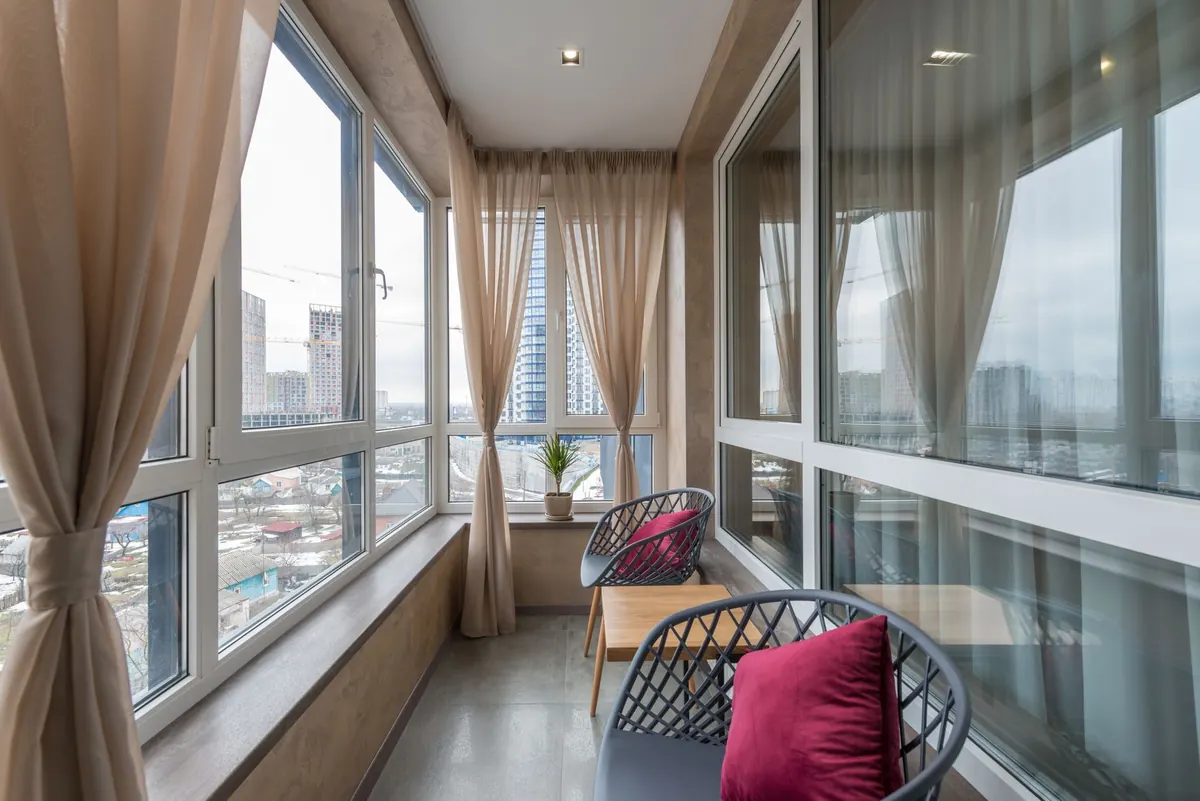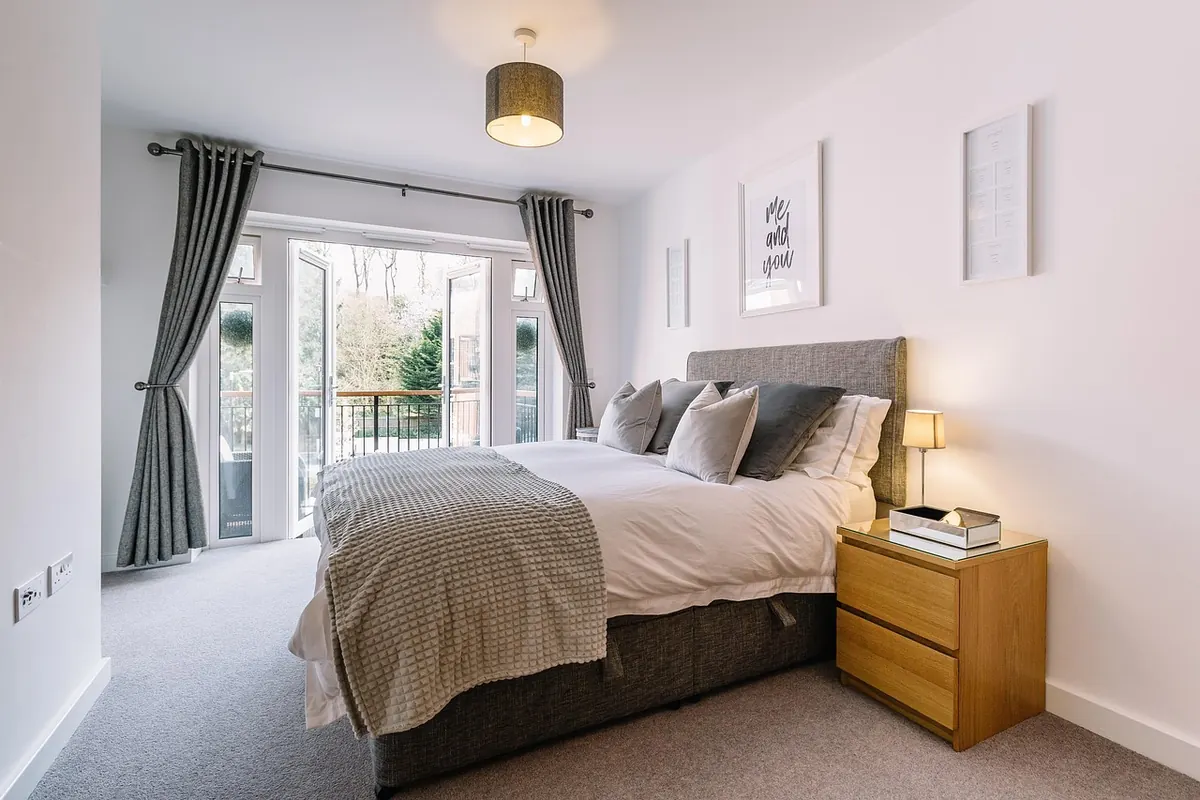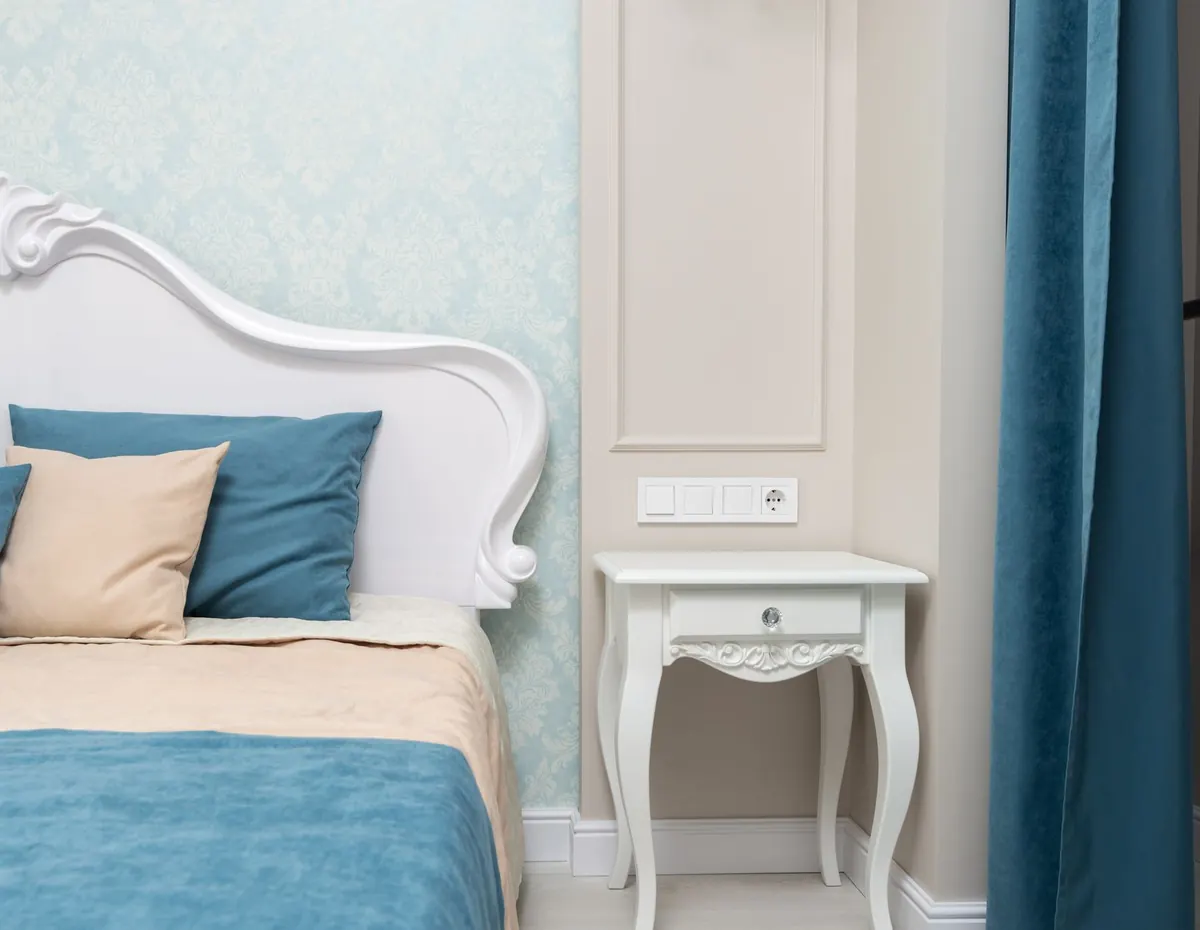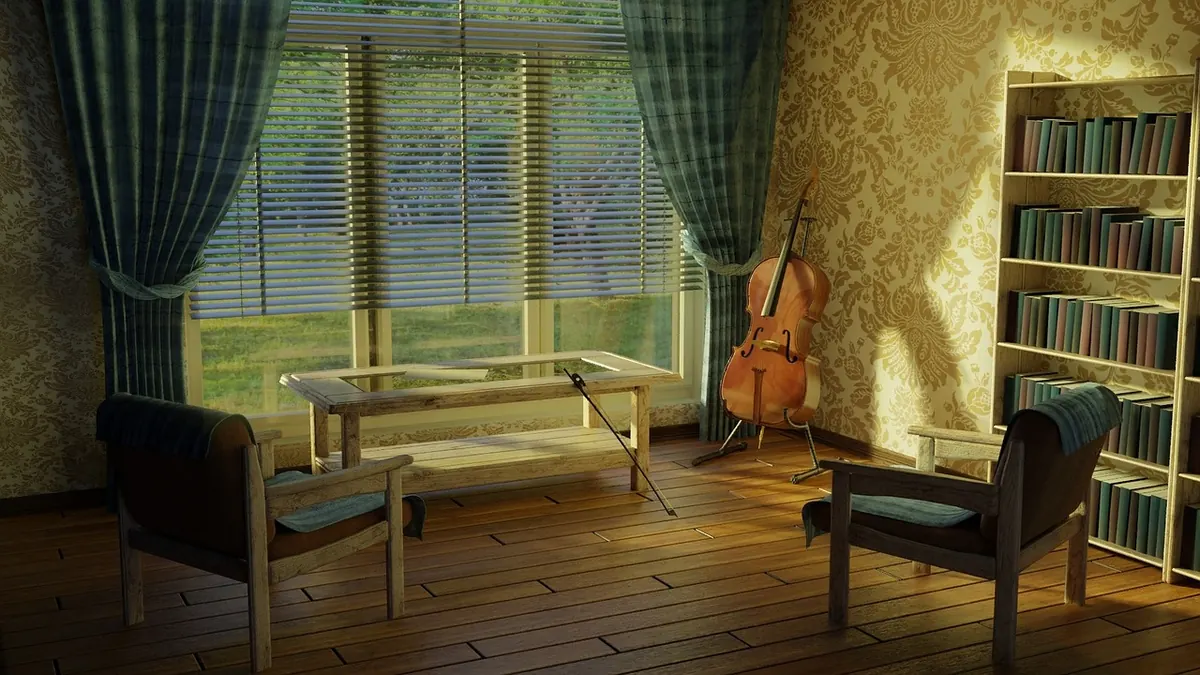
Most windows ask you to choose: a blind for clean lines and precise light control, or curtains for softness and warmth. Layering lets you have both, and it costs less than most people expect. The blind handles the harsh midday glare or the early summer sunrise; the curtains add depth, muffle sound and make a room feel finished. Once you understand how the two layers sit together, the whole thing becomes a measuring exercise rather than a design gamble.
Why Two Layers Beat One
A single blind is efficient but flat. It stops light, yet it does little for the feel of a room. A single curtain is generous but imprecise. Pull it half closed and you get a soft wash of light across the whole window, whether you wanted it or not.
Put them together and you get two separate dials. Close the blind to cut the sun on a hot afternoon while the curtains stay open and keep the view. Draw the curtains at night for privacy and warmth, leaving the blind raised. In winter, the extra air pocket between the two layers slows heat loss at the glass; in summer, closing both during the hottest hours keeps the room noticeably cooler.
There is a practical benefit too. Blinds alone can look a little office-like in a bedroom or living room. Curtains alone can leave a bright halo around the edges. Combined, the blind covers the edges and the curtain covers the hardware.
Pick the Blind First, Then the Curtain
The blind is the layer that sits closest to the glass, so it sets the rules. Choose it for the job it has to do, then choose a curtain that complements rather than competes.
Roller and Roman blinds
Rollers are slim and unobtrusive, which makes them the easiest partner for full-length curtains. Romans bring texture and a soft fold, so keep the curtain fabric simple if the Roman is patterned. Both work well face-mounted above the recess, where they clear the curtain fabric without touching it.
Venetian blinds
Venetians give the finest light control of any blind: tilt the slats and you can bounce light off the ceiling or send it down onto a table. Pair them with lightweight linen or voile curtains that let you soften the room without blocking the slats entirely. Timber slats against natural fibres read warm and calm; aluminium slats sit better with crisper cottons.
Vertical blinds
Usually found on wide windows and sliding doors, verticals need more clearance because the slats stack to one side. Check that the curtain stack and the blind stack do not fight for the same corner. If they do, reverse the blind's stacking direction when you order it.
Blackout layers
For a bedroom, a blackout roller blind behind a lined curtain is the most reliable combination. The blind does the heavy lifting on light; the curtain adds insulation and softness. A blackout curtain alone often leaks light at the top and sides, which is exactly the gap the blind covers.
Measure for Both Layers at Once
Most layering problems come from measuring each layer separately. Work out the two together, on paper, before you order anything.
Measure the blind to fit the recess or to overlap it slightly, depending on the style. Then measure the curtain rod to sit roughly 10 to 15 cm above the top of the blind, and extend it 15 to 20 cm beyond each side of the window. That extra width is what stops light creeping around the edges and gives the curtains somewhere to sit when they are open.
Depth matters as much as width. A face-mounted blind needs enough bracket depth to clear the window handle. The curtain needs to hang in front of the blind's brackets without pressing on them. If the gap between the two is tight, a slim roller blind and a shallow curtain track will solve it; bulky timber blinds and heavy poles will not.
Finally, check the stack. A curtain panel gathered at one side takes up real space. Allow roughly a third of the panel's flat width as a working estimate, and make sure it clears the blind's mechanism, the window handle and any furniture below.
Choose Fabrics That Play Well Together
Two layers give you a chance to mix weight and texture, and that contrast is what makes layering look intentional rather than accidental. A chunky wool curtain over a fine slatted blind feels considered. A heavy curtain over a heavy blind feels like a wall.
- Light and heavy: pair a dense curtain (velvet, wool blend, heavy linen) with a slim blind (roller, aluminium Venetian).
- Textured and plain: let one layer carry the pattern and keep the other quiet.
- Lined curtains: worth the extra cost in any room you use at night. The lining improves drape, protects the face fabric from sun and adds a little insulation.
- Sheer underlayers: if you want daytime privacy without darkness, a voile panel behind a slatted blind works better than a single heavy curtain.
Keep the colour families close. Curtain and blind in neighbouring tones, one slightly darker or warmer than the other, will look calm from every angle. High-contrast pairings can work, but they draw the eye to the window rather than the room.
Three Ways to Hang Both Layers
Double rod. A pole with two brackets, front and back, is the simplest route. Hang the lighter or more decorative curtain on the front rod and keep the back rod for lining or sheer. Check that the finials clear the wall.
Ceiling-mounted track. Ideal for floor-to-ceiling windows and small rooms. A track fixed to the ceiling lets curtains hang past the window and makes the room feel taller. Fit the blind to the recess and the track a few centimetres in front of it.
Pelmet or recessed box. If you are building or renovating, a recessed box hides both the blind and the curtain track. The result is very clean, but measure the internal depth generously. It is much harder to fix after the plaster is up.
Five Mistakes Worth Avoiding
- Buying curtains too short. A curtain that stops just below the blind or above the floor looks like a mistake. Go to the floor, or to the sill, never in between.
- Skipping the fullness. Aim for at least twice the rod width in total fabric. Less than that and the curtains pull flat and the layering looks thin.
- Ignoring the overlap. The blind and the curtain need to overlap by at least a few centimetres vertically, or light will find the gap.
- Forgetting the cords. Blind cords and chains need to hang free and be secured out of reach of children. Never trap a chain behind a curtain panel.
- Mixing two bold patterns. It can be done, but it takes confidence. If in doubt, let the blind be plain.
Fit the Blind Before You Fit the Curtain
Work from the glass outwards. Install the blind first, so you can see exactly where the brackets sit and how much clearance you have left. Then fit the rod or track, checking the drop with the curtains temporarily hung. Only then fit the final brackets and hooks.
Before you drill, hold the curtain panel up and look at it in daylight. It is far easier to move a pencil mark than a bracket hole. If the window gets strong afternoon sun, close both layers at that time of day for a week and see how the room behaves.
Start With One Window
You do not need to redo the whole house. Choose the window you use most, usually the bedroom or the main living room, and layer that one properly. Measure carefully, buy the blind first, and hang the curtain slightly wider and higher than feels instinctive. When it works, you will know within a day. Then repeat the same measurements upstairs, with a little more confidence and a lot less guesswork.
Photo: mielcar / Pixabay